 NB INSTRUMENT
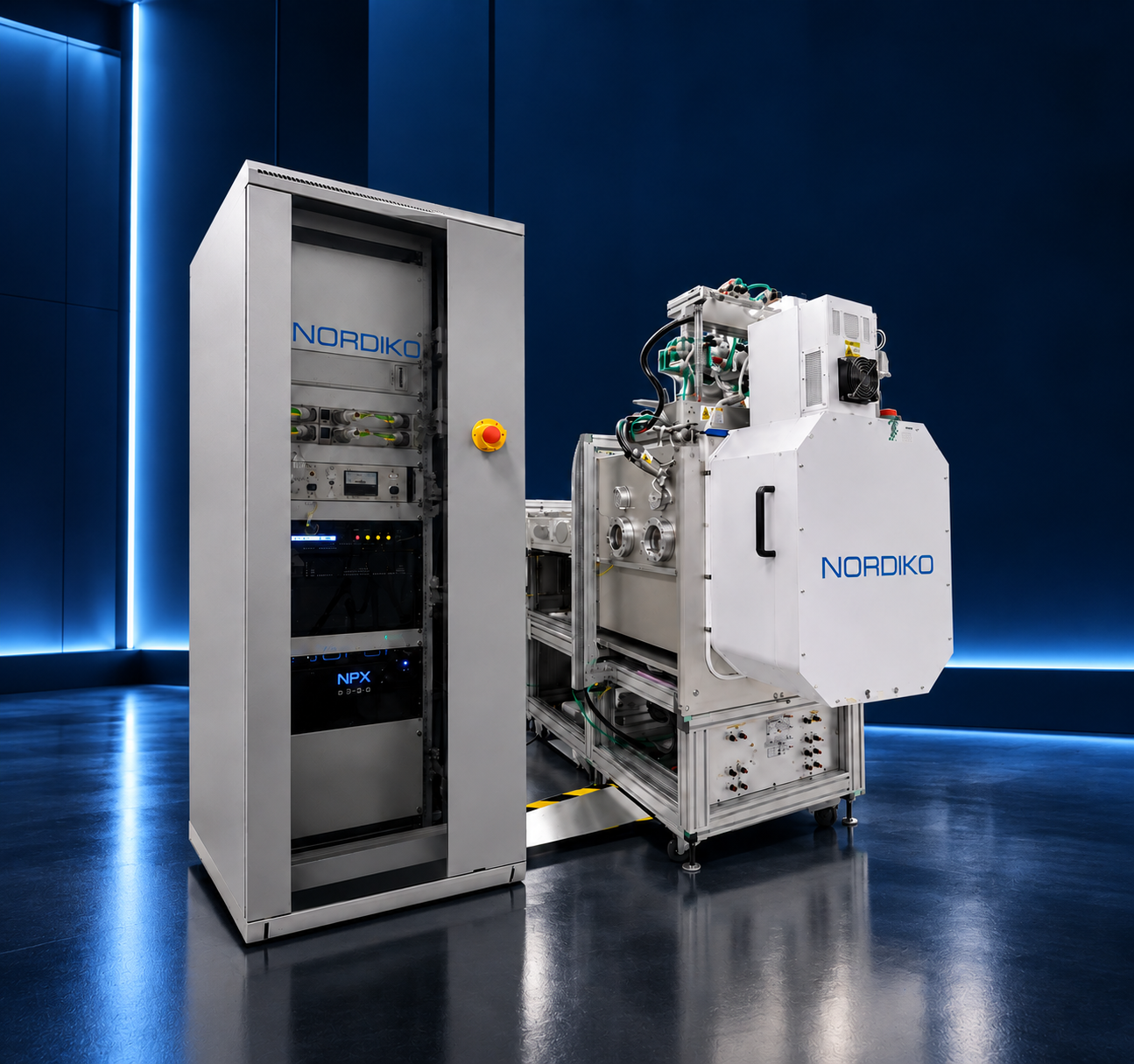
Ion Beam Milling System 7500
Broad ion-beam processing for precision thin-film milling and surface preparation.
A controlled beam, directed at the surface.
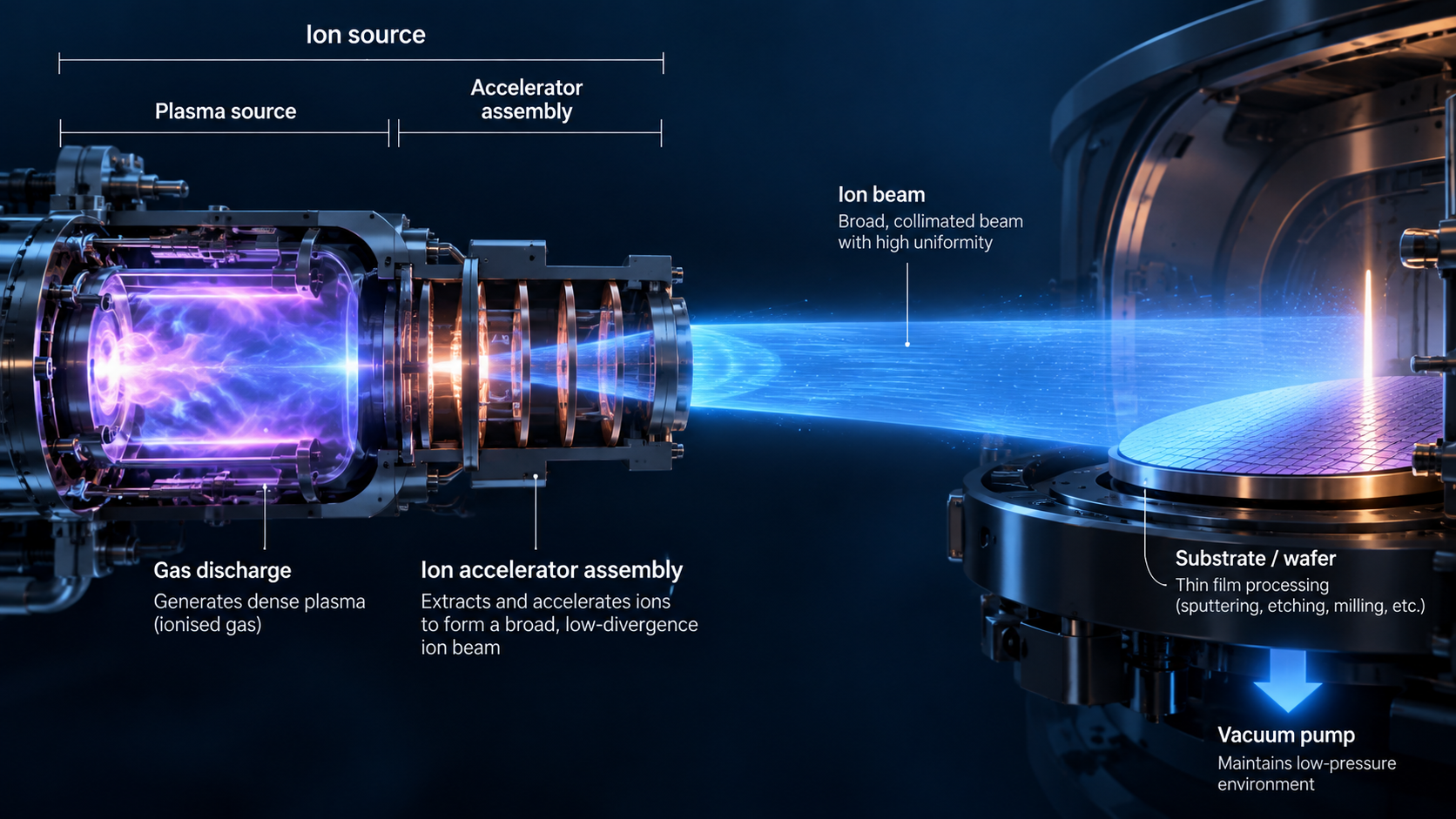
Nordiko describes a gridded ion source that forms a broad beam by drawing positive ions from a low-pressure plasma and accelerating them through perforated electrodes.
In milling, energetic ions physically remove material from a substrate. The process is especially relevant where conventional chemical etching is less suitable, including noble metals and magnetic thin films.
From plasma to precise patterning.
Broad ion beam
A gridded accelerator forms beamlets that merge into a broad beam for thin-film processing.
Physical milling
Ion impact removes material through sputtering rather than relying solely on chemical reactions.
Beam neutralisation
Nordiko describes a filament-less plasma-bridge neutraliser for its broad ion-beam systems.
Reactive option
Reactive gases may be introduced in the source or at the substrate, depending on the process approach.
Ion-beam process principles.
| Technology | Gridded broad ion-beam milling / etching |
|---|---|
| Typical process beam range | 200–2,000 V (Nordiko's published technology range; not a confirmed 7500-system specification) |
| Processing environment | Low-pressure vacuum |
| Process modes | Physical ion milling; reactive ion-beam approaches described by Nordiko |
| Neutralisation | Plasma-bridge neutraliser described for Nordiko broad ion-beam systems |
Nordiko's ion-beam technology page explains the process, but does not publish a model-specific 7500 datasheet. Confirm system configuration and performance before procurement.
Thin films that need a different approach.
- Noble-metal thin-film patterning
- Magnetic-film and MRAM research
- Precision ion-beam etching
- Surface preparation and thin-film development
Tell us what you are working on.
Start with the research objective. We’ll help connect the requirement to the right technology path.
Discuss your requirement